

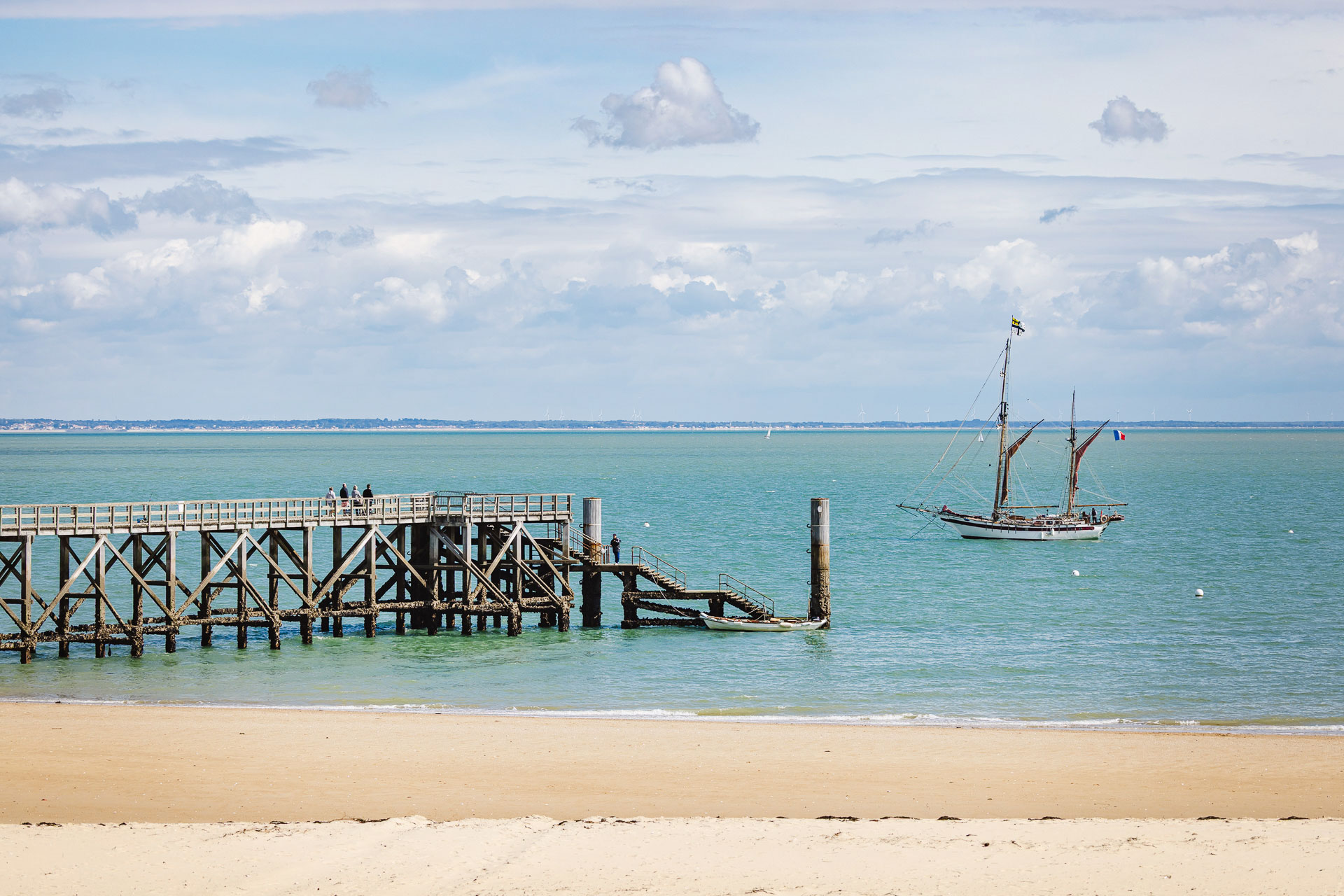
On the Atlantic coast of France, separated from modern life by the rising tide, the island of Noirmoutier preserves the French oceanside vacation: shellfishing, cycling, and local gastronomy.

By Manon Tomzig
Journalist and travel writer, Tablet contributor
Check out all Tablet-recommended hotels in and around Noirmoutier.
Just getting to Noirmoutier is an extraordinary experience. To reach the island, you take the Passage du Gois, a natural submersible causeway, of which there are only a few in the world. At high tide this 4km stretch of sand is completely submerged, so choose your crossing time carefully. Emergency safety towers have been installed along the route for unlucky drivers. If you’re not feeling adventurous — spoiler alert — you can always use the bridge that has connected the island since the 1970s.
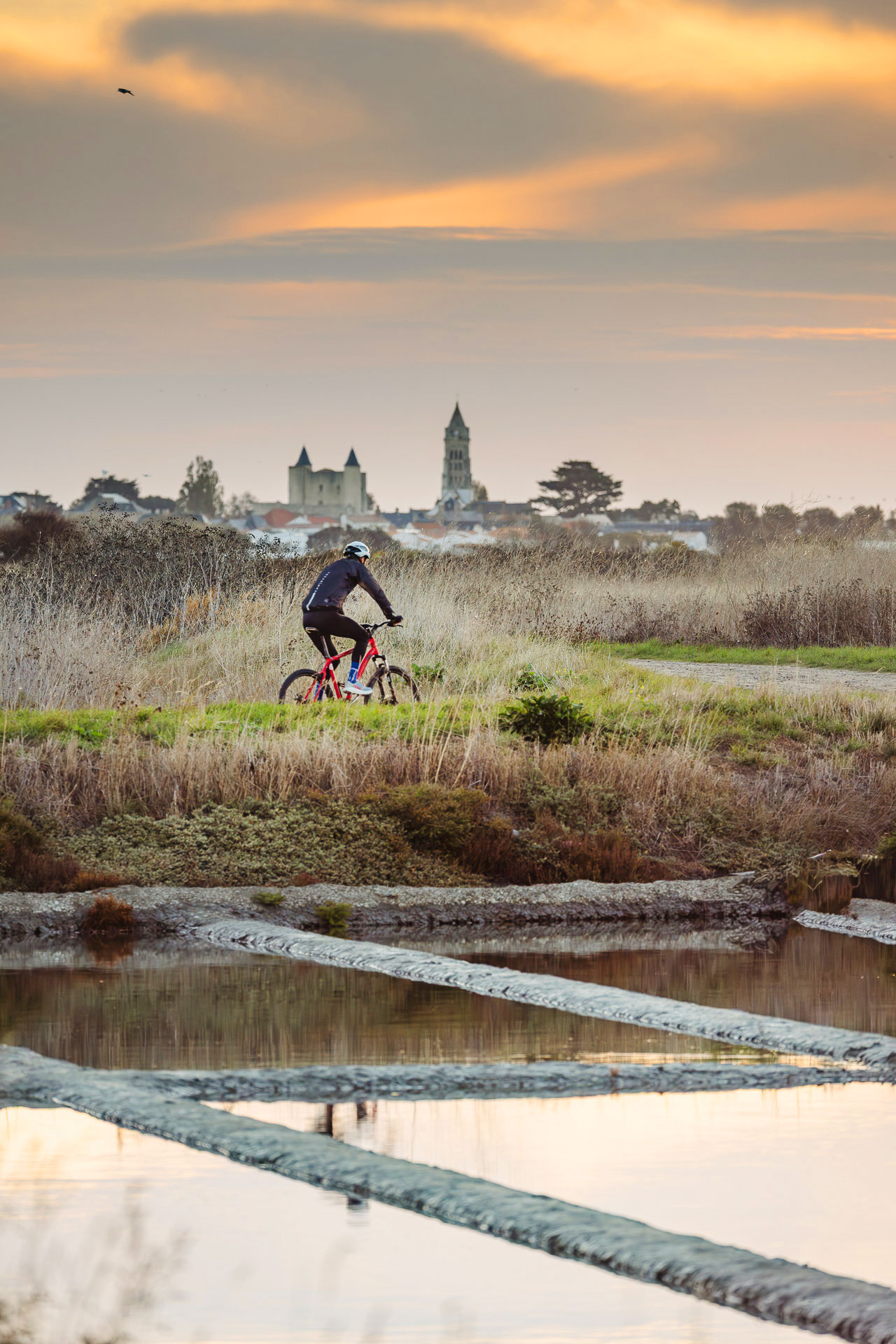
Once you’re on dry land, two-wheelers fly by from all sides. You’d think you’d landed in Amsterdam. Here, everything is done by bike, perhaps a vestige of a time before cars could easily come ashore. More than 80km of cycle paths crisscross through villages, forests, mills, dunes, beaches, and marshes. Families, retirees, city dwellers, and locals mingle, hair blowing in the wind, heading to the market or returning from the beach.
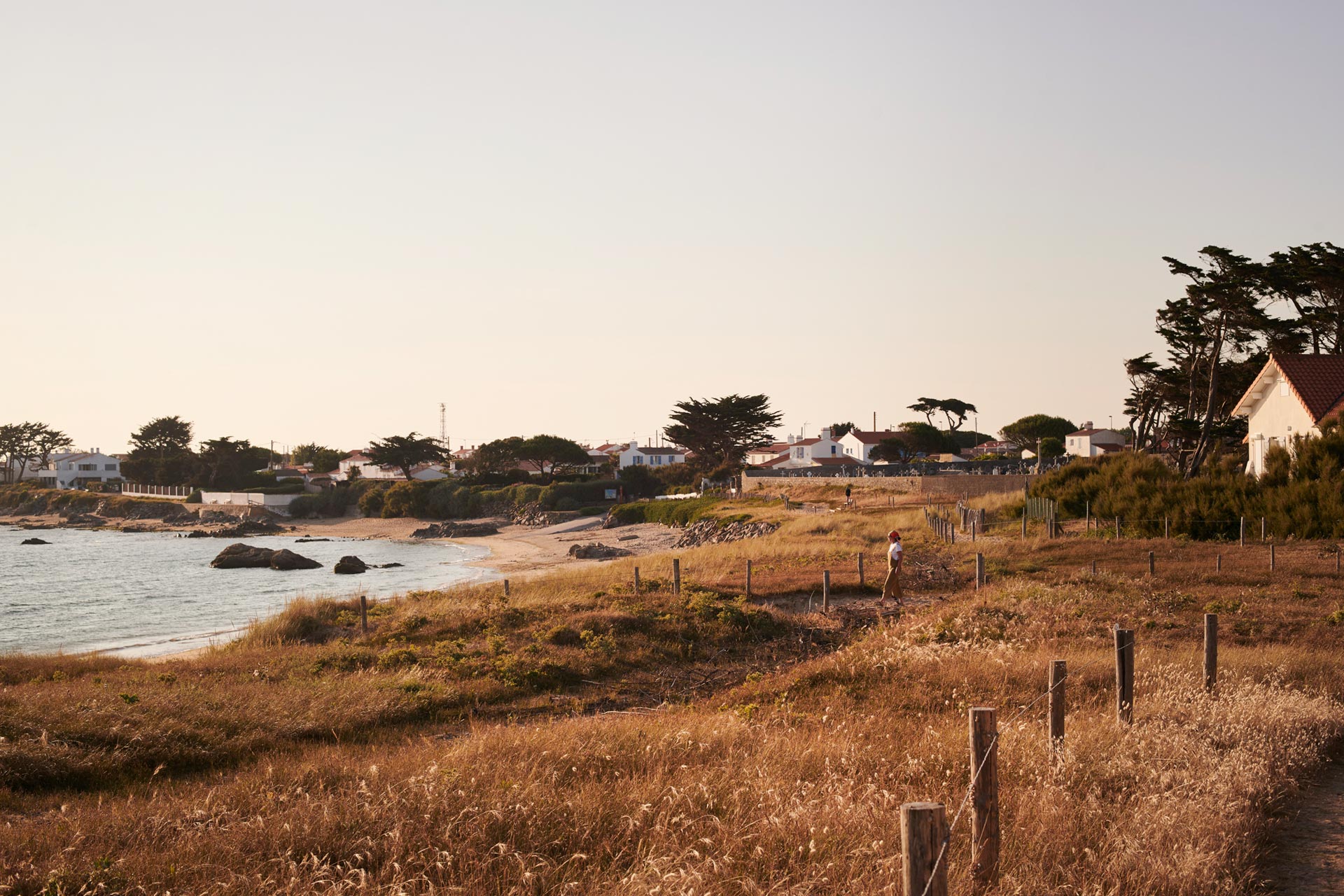
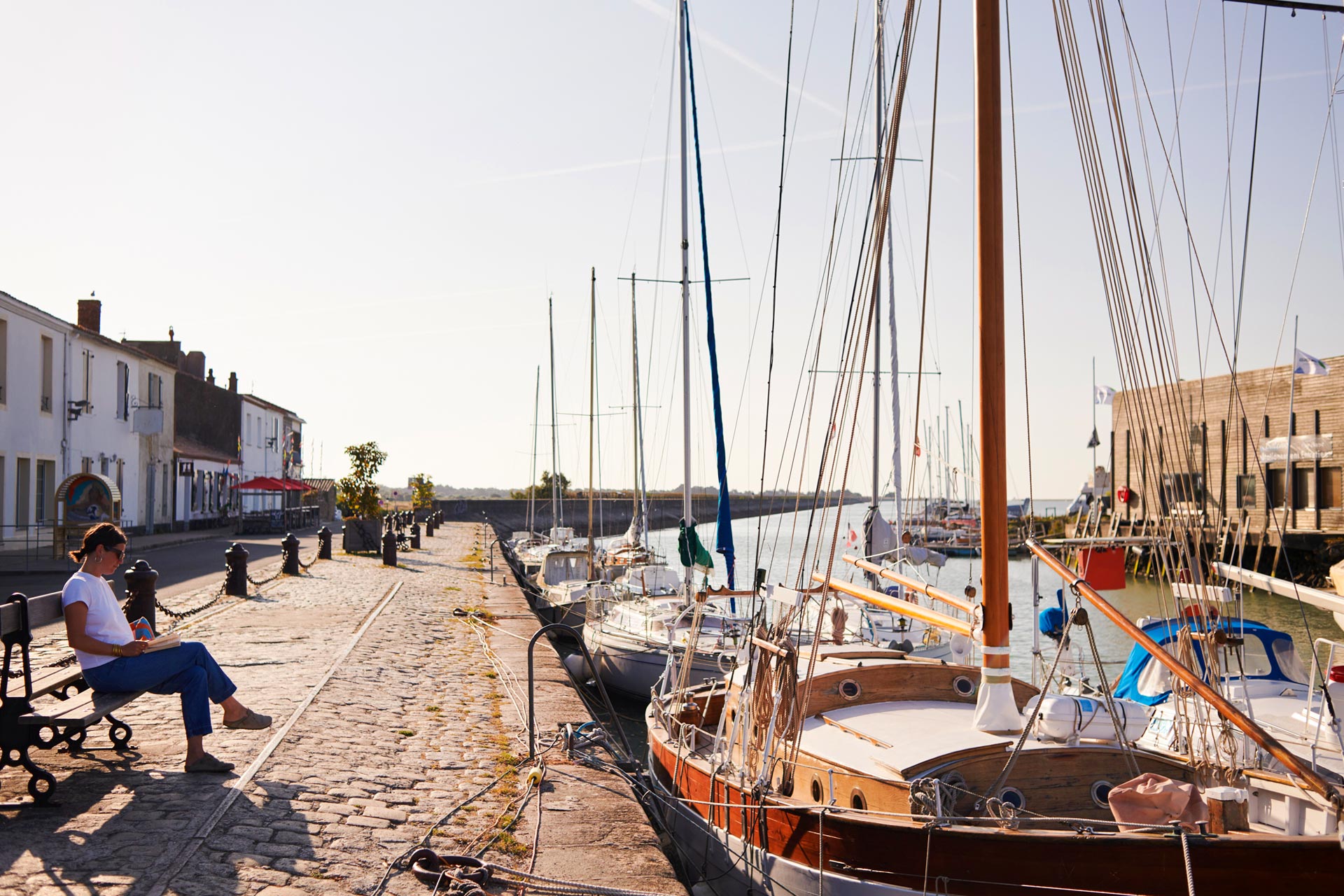
Life in Noirmoutier is set to the rhythm of the sea. The deep blue of the Atlantic fills the space. Fishing and pleasure boats punctuate the landscape. The canals are decorated with fishermen’s huts on stilts. The coast alternates between wild beaches and family beaches, bordered by pine forests. Beach huts stretch along the sand.
Then, suddenly, the ocean recedes. The water disappears as if by magic, revealing a lunar panorama. Locals and vacationers arrive en masse, wearing Méduse boots or sandals and armed with buckets and nets to indulge in the local sport: shellfishing. Oysters, mussels, and fish are found in the evening on barbecues and restaurant tables. The day’s finds are accompanied by bonnotte, small, very rare potatoes grown amidst seaweed, purchased at exorbitant prices at auctions and also highly prized by top chefs.
The salt from Noirmoutier, the white gold used by Michelin-starred chefs, is renowned throughout the world. A third of its surface area is covered by salt marshes. You can explore them on foot or by bike, admiring the many bird species they harbor. Even today, the salt and its flower are harvested by hand by salt workers using skills inherited from the Middle Ages.
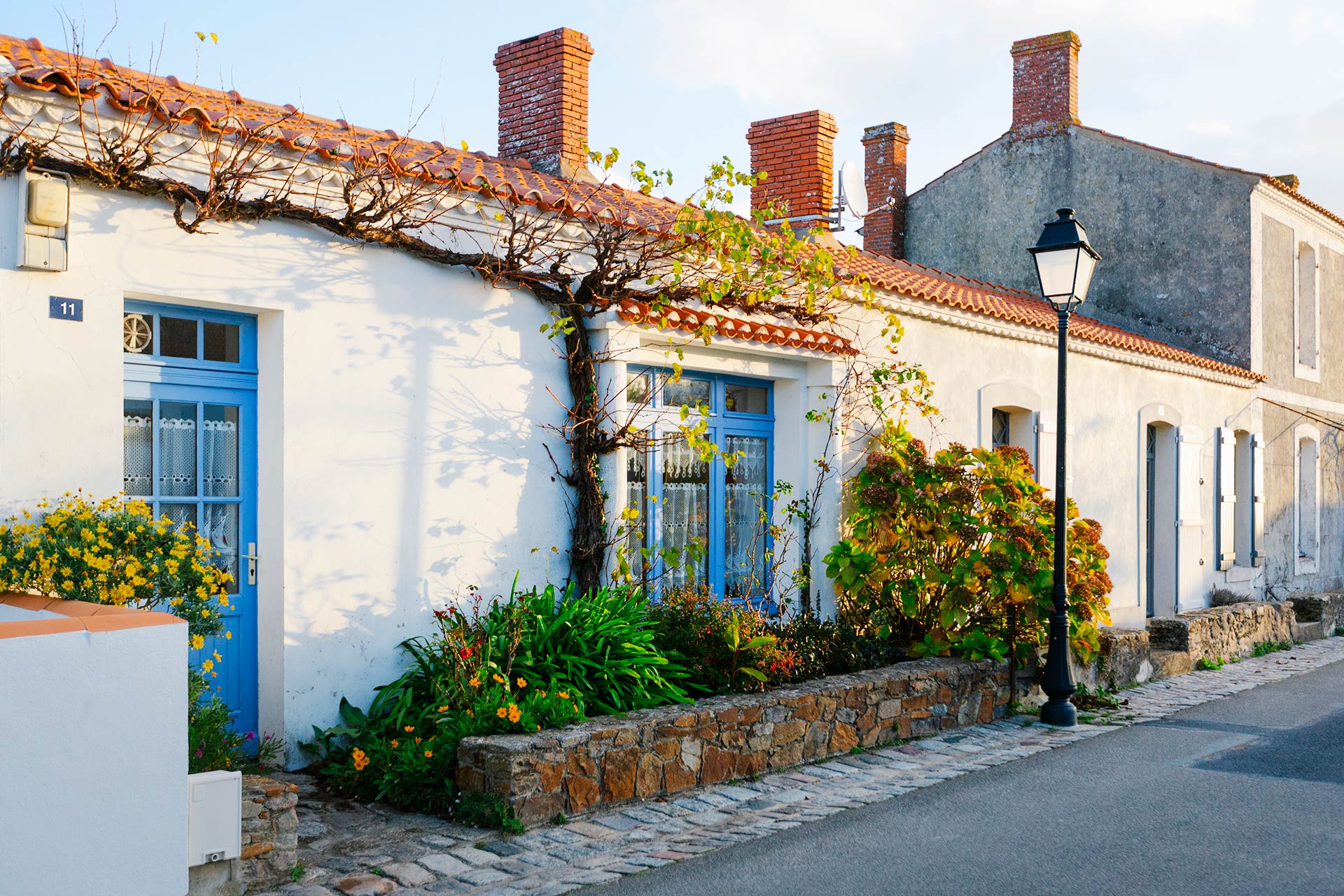
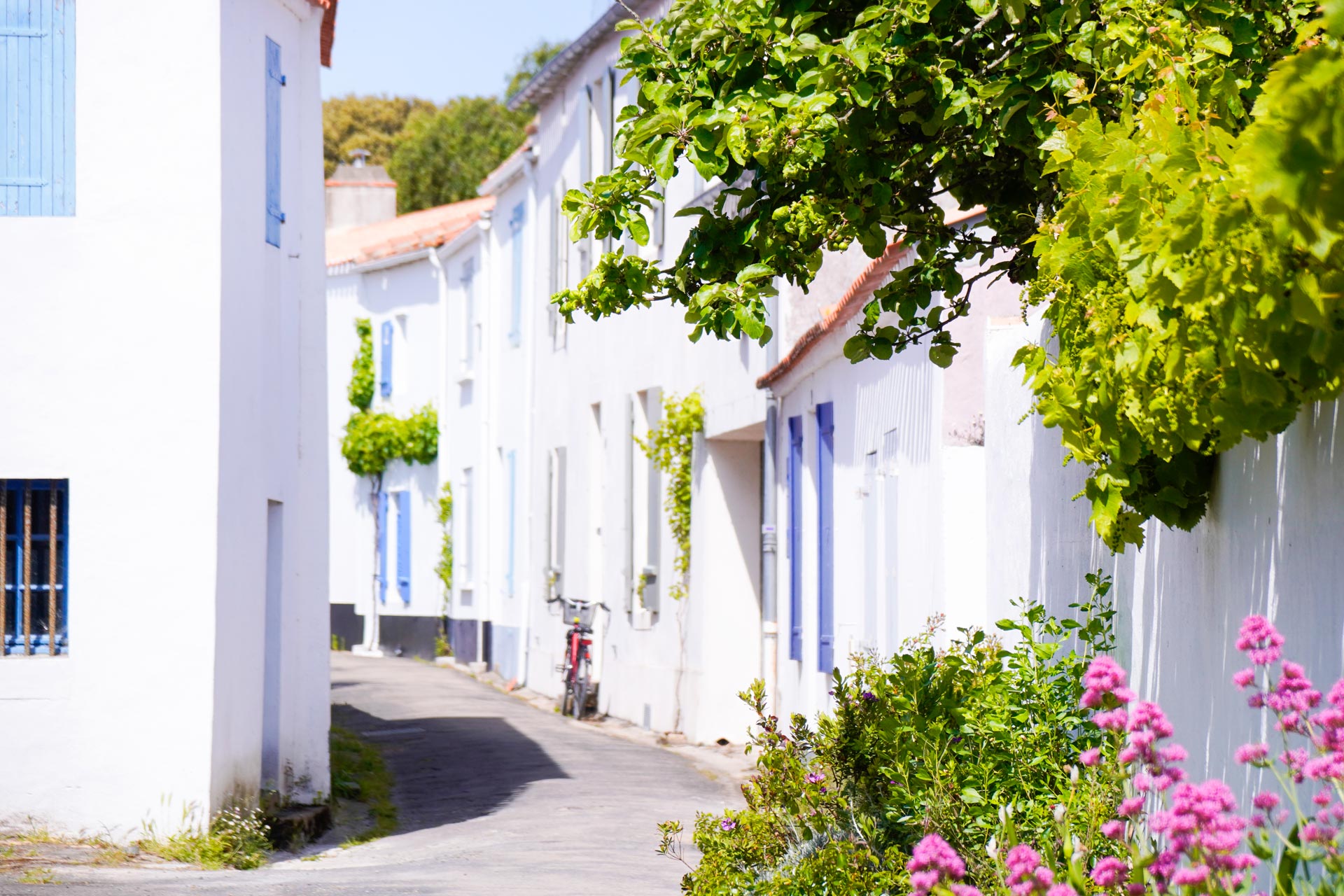
The villages of Noirmoutiers date back just as far. Former fishing villages, they share a strong visual identity (and the delicious scent of figs). It’s a joy to lose yourself in their maze of cobbled streets lined with low whitewashed houses decorated with red tiles, colorful shutters, and climbing flowers. To preserve the island’s authenticity, strict architectural rules have been established. Facades must be white to reflect the sun’s rays and prevent erosion from the salty air. Shutters can only be painted green or blue, following a very specific color chart.
Another medieval treasure that surprises you on a fishing island: Noirmoutier Castle, a massive 12th-century fortress built to protect the island from naval attacks, particularly from the English. This imposing stone block served as a military stronghold, a stately residence, and a prison before being converted into a museum. It can be admired from L’Ile Ô Château, a favorite hotel of ours in Noirmoutier that’s just across the castle moat. On the other side of the island, we’re also quite fond of Maison Moizeau. It’s not right next to a castle, but it is right next to a Three Michelin Star restaurant, La Marine.
Check out all Tablet-recommended hotels in and around Noirmoutier. And/or: subscribe to our newsletter.