

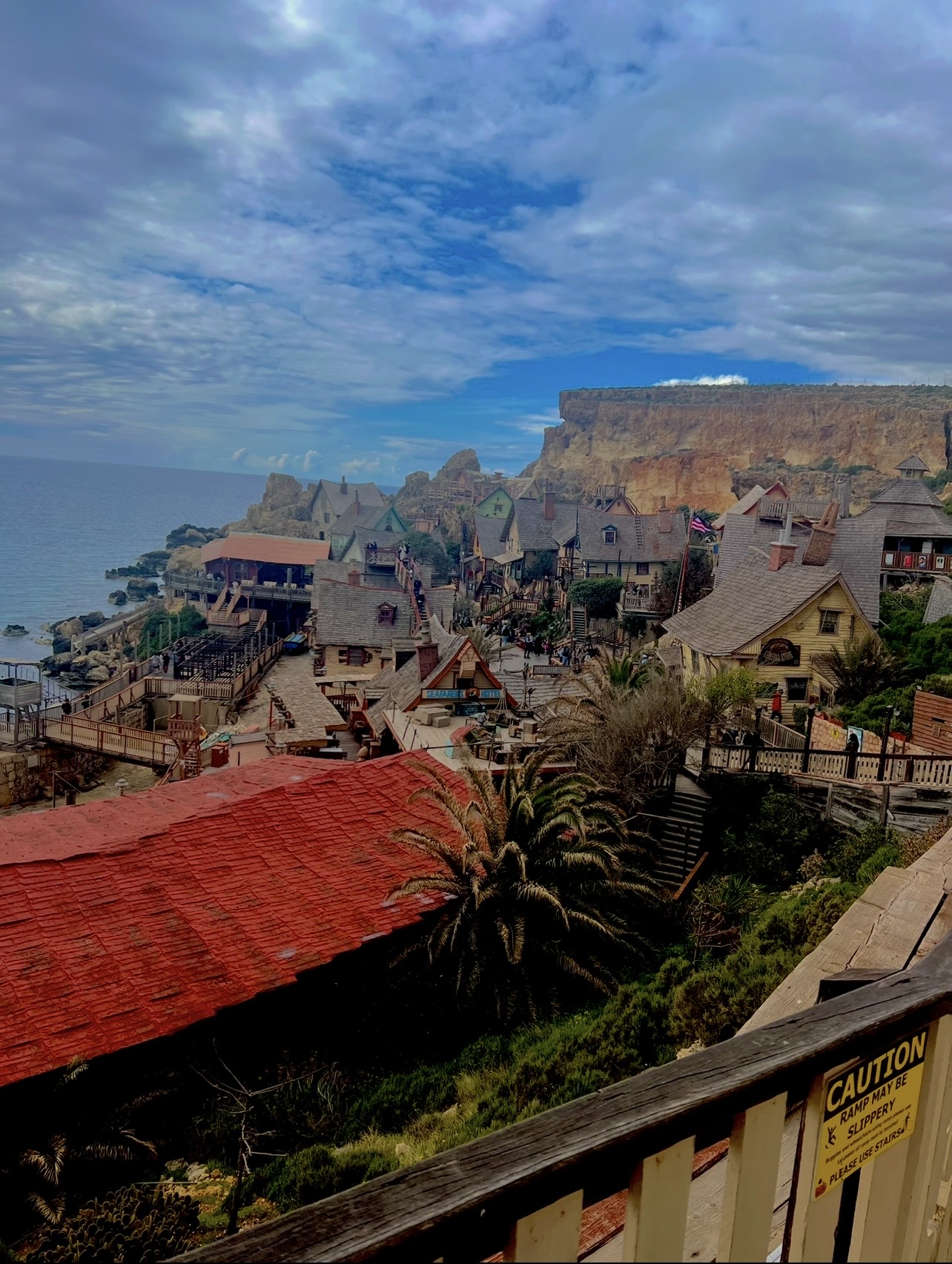
The history of film tourism is extensive, with pilgrimages inspired by everything from the Sound of Music to Star Wars to a certain sailor man in Malta. Our new correspondent, journalist Yourgo Artsitas, delves into why countries gamble on Hollywood.

By Yourgo Artsitas
Journalist, Filmmaker, Tablet Correspondant
In 1979, legendary movie producer Robert Evans was looking to bring the comic strip Popeye The Sailor Man to life. Robin Williams was cast as the titular lead (his first film role), American auteur extraordinaire Robert Altman signed on to direct and, perhaps most importantly, it was to be a musical.
Scheduling forced the need to shoot from January to May. Sweethaven, where the film’s action takes place, is supposed to be a ramshackle New England seaside village, so anything tropical was out. They needed rocky terrain on a coast with reasonable weather the first five months of the year.
In comes Malta.
Production designer Wolf Kroeger threw together a full-fledged coastal community in just months, bringing in nearly 200 construction workers to make a cartoonish-yet-authentic fishing village on the country’s northwest coast.
Famously, the actual production was a disaster. Robin Williams prosthetic forearms didn’t fit when they arrived, so he’d remove them in between takes to not lose circulation. Rumors of drug use are aplenty. Overall a real fiasco of a shoot.
Popeye was released to critical disappointment and received the coveted “Worst Picture” at the Stinkers Bad Movie Awards. In its wake, the film was seen as a blemish on Altman’s oeuvre and something Robin Williams had to overcome in his career.
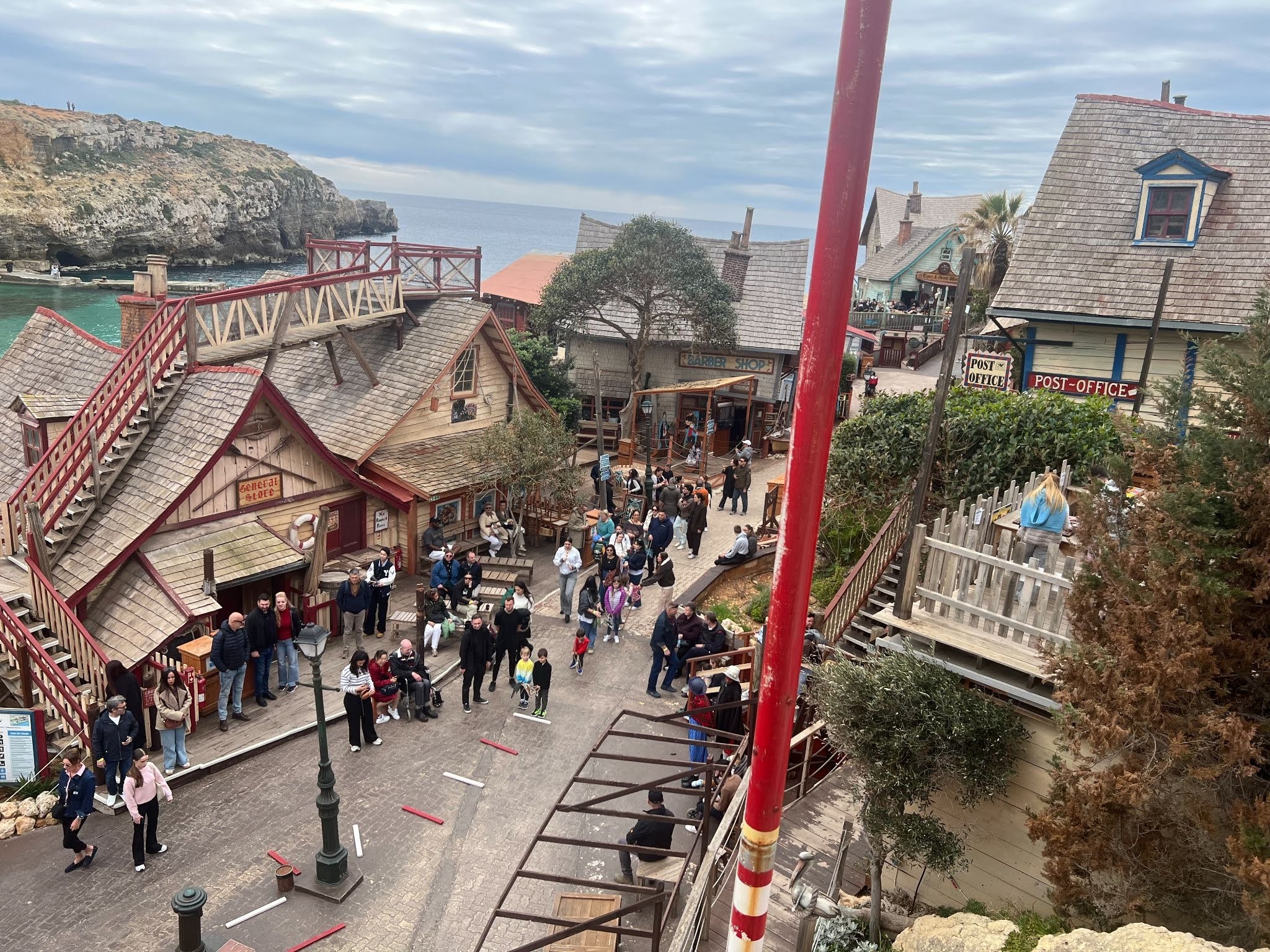
Its most lasting legacy are the sets, nearly two dozen kooky wooden shanties lined across the jagged cliffs of Anchor Bay. For over forty years, the whimsical makeshift town has acted as a theme park, with a real live Popeye, Bluto and Olive Oyl trolling the grounds in character. The cafe serves Popeye-themed food like a spinach burger with a Popeye Village logo burned onto a green bun.
Despite the film’s lukewarm response, Sweethaven is one of Malta’s most popular tourist attractions, and helped spur what has become a successful domestic film industry. If you can get tourists to come see an old set from a movie few care about, why wouldn’t any country want its own Popeye?
INCENTIVES ABROAD
Countries know that movies shot locally can become part of the their appeal to tourists. Even just a single scene can make a local spot an international destination. So, to attract American productions, governments incentivize, offering exceedingly advantageous tax rebates and subsidies.
Since COVID, the United States has seen an acceleration of Hollywood films shooting abroad. A bunch of locals get jobs, a bunch of foreign money matriculates into the host country and, in exchange, a bunch of money goes back to Hollywood production companies.
This symbiosis has dropped America’s share of global production from 52% to 38% since 2022, with Los Angeles specifically losing over 42,000 jobs from 2022 to 2024.
Certain states in the U.S. also offer incentives, sure. But over the past few years, enough foreign countries have opened their financial arms to greet Hollywood with such beneficial terms, it’s often cheaper to simply pay everyone to live abroad for the weeks-to-months production than staying in America.
The United States government is working on the issue. President Trump said in May 2025 he would impose “a 100% Tariff on any and all Movies coming into our Country that are produced in Foreign Lands.” To this date, nothing to that effect has materialized. He’s also recruited Sylvester Stallone, Mel Gibson and Jon Voight as “Special Ambassadors” to help bring production back stateside.
But when you hear politicians and economists talking about this issue, the concept of “film tourism” gets marginalized. The main line items will always be the jobs created and the economic impact during filming. Those are hard numbers people can sell. What can’t be precisely quantified is bottling movie magic and keeping it to show off for decades to come.

THE RISE OF FILM TOURISM
The pioneering moment in film tourism came nearly 100 years ago.
In 1935, legions watched Clark Gable lead a revolt on the high seas in the Academy Award Best Picture-winner Mutiny on the Bounty. Enough folks were so taken by the sweeping grandeur of the location, Tahiti saw a major jolt of foreigners coming to experience it themselves.
For the next 70 or so years, film tourism would spring up but would feel anomalous and reserved for small communities. The Sound of Music turned Salzburg, Austria into a tourism hotbed, drawing up to 300,000 musical fans yearly, eager to follow in the footsteps of the Van Trapp family. One poll showed 70% of visitors had the movie as the main reason for their visit.
Slowly countries started to take note.
Once the Lord of the Rings trilogy finished filming in 2002, New Zealand made its own Popeye Village. The Kiwis repurposed the stripped-down set into an immersive park called “Hobbiton” with tours that run to this day.
Tunisia has gotten the upper-crust of Star Wars fans coming to see what Luke Skywalker felt like living on Tatooine. When the prequels were filmed in the late 90s, Tunisia was happy to have director George Lucas back.
And then came smartphones.
Comprehensive mapping software. A camera in everyone’s pocket. Social media to catalogue and/or show off to your friends. The concept of a “bucket list.”
The last decade-plus has been a perfect storm for people who want to visit where they shot The Perfect Storm. There’s even an app called “SetJetters” that allows users to pinpoint, explore and log movie locations worldwide. What was once niche and for nerds is now as accessible as finding a restaurant on Yelp.
To be clear: it’s not a perfect, absolute benefit. There are unforeseen consequences these communities have had to endure. The beach from 1997’s The Beach starring Leonardo DiCaprio had to be shut down in 2018 because it had become environmentally unstable due to added tourists. The house from AMC’s series Breaking Bad in New Mexico is constantly vandalized with pizzas on the roof as a tribute to the show.
But the pros outweigh the potential cons. In 2014, to reinvigorate tourism after political unrest, Tunisia invited Star Wars fan clubs from Europe for a full Jedi parade in the capital and screenings of the films around the original sets. As of 2024, 14% of all tourists who visit the country of New Zealand specifically came for Lord of the Rings or The Hobbit.
As long as countries can add exclusive attractions to their tourism portfolio in perpetuity, governments will continue to gamble on Hollywood.
The question is: Why doesn’t Hollywood call their bet?
WHAT AMERICA GIVES UP
Deep near the northeast corner of Wyoming, a family has been showing the same movie every summer night for the past 40 years.
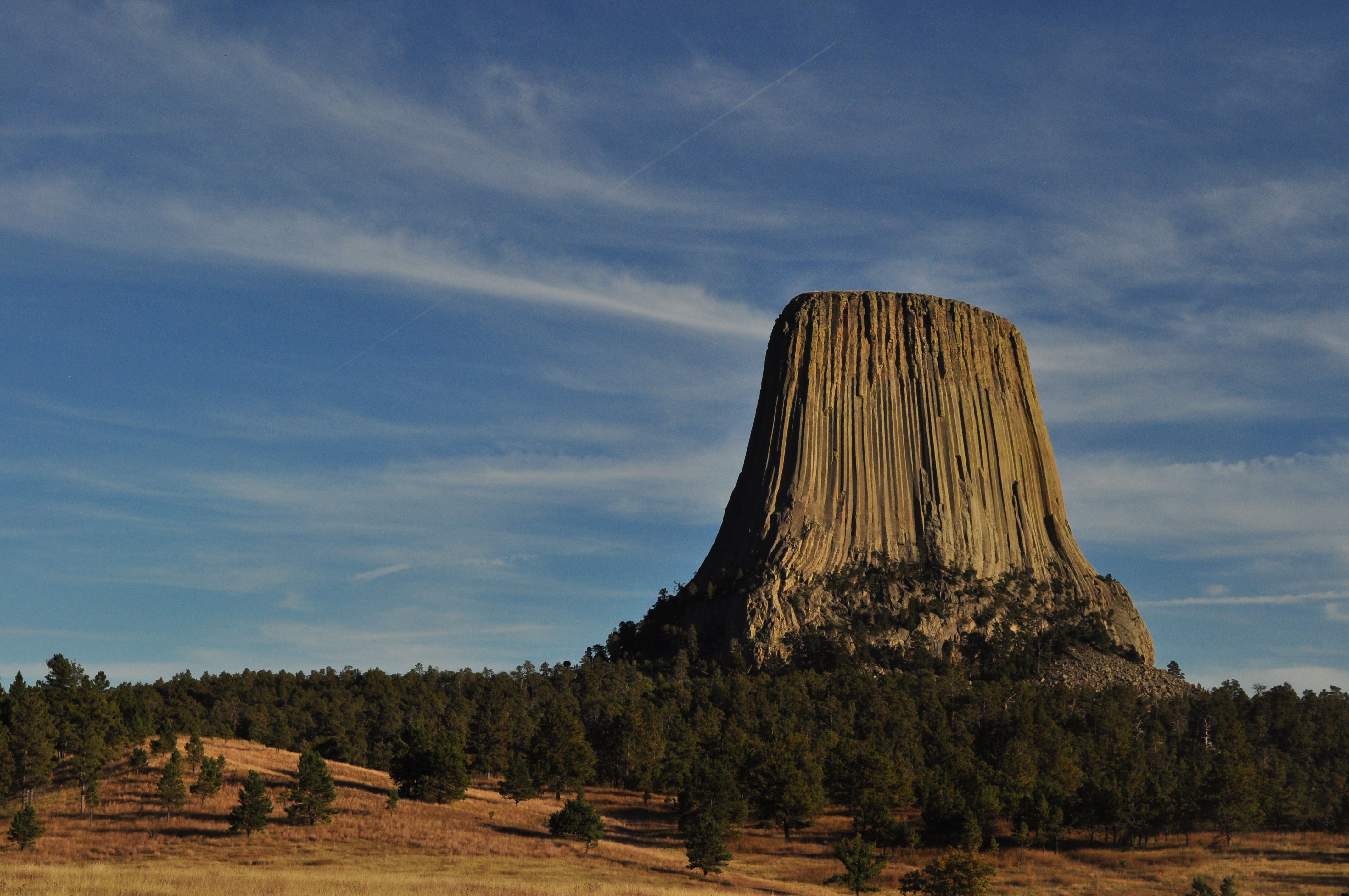
The Driskills set up their screenings outdoors. Dozens of mismatched chairs face toward a custom wooden hut as a screen shines into the twilight. In the distance behind the screen is Devil’s Tower, a miraculous cylinder of rock pushed up from the earth like a massive lip balm coming out of its tube.
The butte in the background is fitting. They’re about to see it make a cameo in the climax of the movie they’re watching: Close Encounters of the Third Kind.
The film was a box office sensation in 1977 and has endured as a classic in the alien genre. Coming after Jaws, it solidified Steven Spielberg as a bonafide hitmaker in Hollywood, but around the country it became a seminal film to the more extra-terrestentially curious cinephiles.
Curious enough to make the pilgrimage to Devil’s Tower. According to the Cowboy State Daily, the decision to film Close Encounters at Devil’s Tower “would go on to completely reshape tourism in northeast Wyoming.”
The surrounding area went from just a hay meadow in rural, desolate Wyoming to a thriving tourist destination. Now, in peak months of July and August it’s capable of getting around 100,000 visitors, with 509,000 the most ever in a single summer. That tourism relates to tens of millions for surrounding Wyoming communities. All from one movie.
In Dyersville, Iowa, the Field of Dreams location went from a rural farm on a winding road to hosting a Twins and Phillies Major League Baseball game on Netflix this summer.
Film tourism is something Americans take for granted because of how prevalent it is around the country. In Philadelphia? Run up the art museum steps like Rocky. In New York? Check out the Ghostbusters station in Manhattan. Boston? Go see if everyone really knows your name at Cheers.
As American lawmakers ramp up the battle to keep film productions in the states, these domestic examples from the past should act as inspiration. Whether it’s a farm in Iowa or a butte in Wyoming, smaller regions around the country should be primed to roll the dice on their own Popeye Village.
With how tenuous streaming has made film production in general, filmmakers will continue to take the best deal they can. Woody Allen received money from the Madrid Regional Government to shoot his next movie, but it also requires a stipulation: the title must include the word “Madrid.”
It’s really up to American governments, federally and lower, to bring jobs back by matching rebates and subsidies. Spend funds in the short term for the potential of a local tourism staple for years to come. Take a chance on something. Manifest a destiny.
If they ever need a reminder, just look to Malta, the only place in the Mediterranean you can find Olive Oyl.